🙏 Shiva✍️ Ravana🗣️ Sanskrit📜 15 verses👁 42 readsSuggest a correction
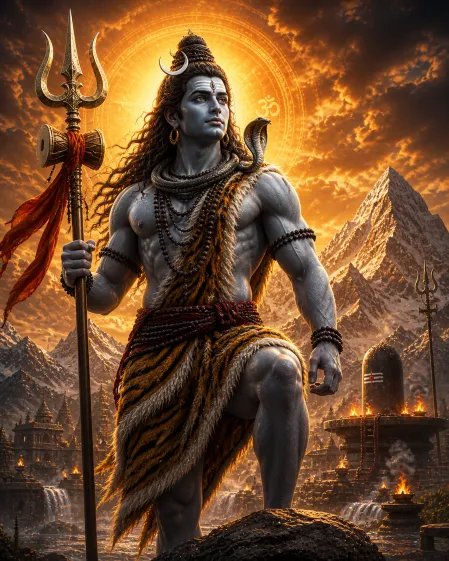
The Shiv Tandav Stotram is a majestic Sanskrit hymn describing
the cosmic dance of Lord Shiva — the Tandava that simultaneously creates, sustains,
and destroys the universe. It was composed by Ravana, the scholar-king of Lanka, who
despite his role as antagonist in the Ramayana was a devoted Shaiva and a master of
Vedic knowledge.
Written in the Druta Vilambita meter, the stotram is celebrated for its rapid,
rolling rhythm and dense alliteration — qualities that make it as much a feat of
Sanskrit poetry as a devotional text. Reciting it is believed to invoke Shiva's
blessings and cultivate mental strength and spiritual resolve.
With his neck consecrated by the flow of water flowing from his matted hair, which is like a thick forest, and wearing a lofty garland of serpents around his neck; Lord Shiva, the auspicious one, performed the fierce Tandava dance to the rhythmic sound of 'damad-damad' of the damaru. May He shower blessings upon us.
जिनका कंठ जटाओं रूपी सघन वन से बहने वाली जलधारा से पवित्र है, जिन्होंने अपने गले में साँपों की ऊँची माला धारण की है, और जो डमरू से निकलने वाली 'डम-डम' की ध्वनि पर प्रचंड ताण्डव नृत्य कर रहे हैं, वे कल्याणकारी शिव हमारा कल्याण करें।
Jaṭākaṭāhasambhramabhramannilimpanirjharī-
vilolavīcivallarīvirājamānamūrdhani |
dhagaddhagaddhagajvalallalāṭapaṭṭapāvake
kiśoracandraśekhare ratiḥ pratikṣaṇaṃ mama ||
My interest is constant in Lord Shiva, whose head is glorified by the rows of moving waves of the celestial Ganga flowing through the deep well of his matted hair; whose forehead glows with the brilliant fire of 'dhag-dhag'; and who wears the young moon on his head.
जिनकी जटाओं के गहरे घेरे में गंगा जी की लहरें तेज़ी से घूम रही हैं, जिनके मस्तक पर अग्नि 'धक्-धक्' कर जल रही है, और जिनके माथे पर बाल-चंद्रमा सुशोभित है, उन शिव में मेरी निरंतर प्रीति बनी रहे।
Dharādharendranandinīvilāsabandhubandhura-
sphuraddigantasantatipramodamānamānase |
kṛpākaṭākṣadhoraṇīniruddhadurdharāpadi
kvaciddigambare mano vinodametu vastuni ||
May my mind find bliss in the Lord, whose mind is delighted by the charming presence of Parvati (the daughter of the mountain king); whose compassionate glance can stop even the most difficult calamities; and who is clad in the directions (Digambara).
जिनका मन माता पार्वती (पर्वतराज की पुत्री) के साथ विलासपूर्ण क्रीड़ाओं से आनंदित रहता है, जिनकी कृपा-दृष्टि मात्र से बड़ी से बड़ी आपदाएं रुक जाती हैं, उन दिशाओं को ही वस्त्र बनाने वाले (दिगंबर) शिव में मेरा मन रम जाए।
Jaṭābhujaṅgapiṅgalasphuratphaṇāmaṇiprabhā-
kadambakuṅkumadravapraliptadigvadhūmukhe |
madāndhasindhurasphurattvaguttarīyamedure
mano vilodadbhutaṃ bibhartu bhūtabhartari ||
May my mind find extraordinary joy in the Lord of all beings, whose directions are anointed with the saffron-like red glow emanating from the jewels on the hoods of the serpents in his hair, and who wears the skin of a mighty elephant as an upper garment.
जिनके बालों में लिपटे साँपों के फणों की मणियों का प्रकाश दिशाओं के मुख पर केसर के समान लाल चमक बिखेर रहा है, और जो मदमस्त हाथी की खाल का ओढ़ना धारण करते हैं, उन भूतों के स्वामी शिव में मेरा मन अद्भुत आनंद प्राप्त करे।
May Lord Shiva, whose footstool is greyed by the dust of flowers falling from the crowns of Indra and all the other gods, and whose matted hair is bound by the king of serpents, grant us eternal prosperity.
इंद्र सहित समस्त देवताओं के मुकुटों से गिरने वाले फूलों की धूल से जिनके चरण कमलों की भूमि धूसरित (धुंधली) हो गई है, और जिनका जटाजूट शेषनाग से बंधा हुआ है, वे चंद्रमा को मस्तक पर धारण करने वाले शिव हमें चिरकाल तक ऐश्वर्य प्रदान करें।
May we obtain the wealth of the matted hair of Shiva, who destroyed the god of love (Kama) with the sparks of fire burning on his forehead; who is worshipped by the leader of the gods (Indra); and who is adorned with the crescent moon.
जिन्होंने अपने मस्तक की अग्नि से कामदेव को भस्म कर दिया, जिन्हें देवराज इंद्र नमन करते हैं, और जो अमृतमयी चंद्रमा की रेखा से सुशोभित हैं, उन महाकपाली शिव की जटाएं हमें आध्यात्मिक संपत्ति प्रदान करें।
My devotion is to the three-eyed Lord, who offered the five-arrowed god of love as an oblation to the fire burning 'dhag-dhag' on his forehead, and who is the only artist capable of drawing decorative patterns on the person of Parvati.
मेरी प्रीति उन त्रिनेत्र धारी शिव में है, जिन्होंने अपने ललाट की 'धक्-धक्' जलती अग्नि में कामदेव की आहुति दे दी, और जो माता पार्वती के श्रृंगार में चित्रकारी करने वाले एकमात्र कुशल शिल्पी हैं।
May the bearer of the universe, who carries the Ganga, whose neck is dark like the midnight of a new moon obscured by clouds, and who is the repository of all arts, grant us prosperity.
जिन्होंने गंगा को धारण किया है, जिनका कंठ बादलों से ढकी अमावस्या की रात की तरह गहरा काला है, और जो समस्त कलाओं के स्वामी तथा संसार का भार उठाने वाले हैं, वे शिव हमें लक्ष्मी (संपत्ति) प्रदान करें।
I worship the destroyer of Smara (Kama), the destroyer of Pura (Tripura), the destroyer of worldly bonds, the destroyer of Daksha's sacrifice, the destroyer of the elephant-demon Gaja, the destroyer of Andhaka, and the conqueror of death (Yama).
मैं उन शिव की पूजा करता हूँ जो कामदेव, त्रिपुर, सांसारिक मोह, दक्ष के यज्ञ, गजासुर और अंधकासुर का विनाश करने वाले हैं, और जो स्वयं यम (मृत्यु) का भी अंत करने वाले हैं।
I worship Lord Shiva, who is like a bee buzzing around the sweet flow of nectar from the flowers of the auspicious arts of Goddess Parvati; the destroyer of Kama, Tripura, and death.
मैं उन शिव को भजता हूँ जो माता पार्वती की मंगलमयी कलाओं के अमृत का पान करने वाले भँवरे के समान हैं, और जो कामदेव, त्रिपुर तथा मृत्यु का विनाश करने वाले हैं।
Victory to Shiva, whose fierce Tandava is set in motion by the series of auspicious sounds from the mrdanga beating 'dhimid-dhimid', and whose forehead fire glows as the serpents in his hair breathe out intensely.
भगवान शिव की जय हो, जिनका प्रचंड ताण्डव मृदंग की मंगलमयी 'धिन-धिन' की ध्वनि के साथ आगे बढ़ रहा है, और जिनके मस्तक की अग्नि साँपों की फुंकार के साथ और अधिक धधक रही है।
When will I be able to worship Lord Sadashiva with an equal mind toward a hard stone and a soft bed, a serpent and a pearl necklace, a precious gem and a clod of earth, a friend and an enemy, and a commoner and a king?
मैं कब उस समभाव (समान दृष्टि) को प्राप्त कर सदाशिव की पूजा कर सकूँगा, जहाँ मेरे लिए पत्थर और मखमली बिस्तर, साँप और मोतियों की माला, रत्न और मिट्टी का ढेला, मित्र और शत्रु, तथा तिनके और कमल के समान आँखों वाली सुंदरी में कोई भेद न हो?
When will I be happy, living in a cave near the celestial Ganga, with my hands folded over my head, cleared of evil thoughts, and chanting the mantra 'Shiva', while fixing my gaze on the Lord's forehead?
मैं कब सुखी होऊंगा, जब मैं गंगा के किनारे किसी गुफा में रहूँगा, अपने सिर पर हाथ जोड़कर खड़ा रहूँगा, अपनी कुबुद्धि का त्याग कर दूँगा और केवल 'शिव-शिव' मंत्र का जाप करते हुए उनके ध्यान में मग्न रहूँगा?
॥१४॥Verse 14 (Phalshruti)
इमं हि नित्यमेवमुक्तमुत्तमोत्तमं स्तवं
पठन्स्मरन्ब्रुवन्नरो विशुद्धिमेति सन्ततम् |
हरे गुरौ सुभक्तिमाशु याति नान्यथा गतिं
विमोहनं हि देहिनां सुशङ्करस्य चिन्तनम् ||
Imaṃ hi nityamevamuktamuttamottamaṃ stavaṃ
paṭhansmaranbruvannaro viśuddhimeti santatam |
Hare gurau subhaktimāśu yāti nānyathā gatiṃ
vimohanaṃ hi dehināṃ suśaṅkarasya cintanam ||
Whoever daily recites, remembers, and speaks this excellent hymn constantly attains purity. He quickly achieves deep devotion to Lord Shiva, the Guru. There is no other way to liberation, for the contemplation of Lord Shankara removes all delusions.
जो व्यक्ति नित्य इस उत्तम स्तोत्र का पाठ करता है या इसे याद करता है, वह सदा पवित्र रहता है। वह गुरु स्वरूप शिव की भक्ति प्राप्त करता है और उसे मोक्ष मिलता है, क्योंकि शिव का चिंतन मनुष्य के सारे भ्रमों को दूर कर देता है।
At the end of a prayer, whoever recites this song of the ten-headed Ravana during the Pradosha time (evening), Lord Shambhu grants them stable wealth with chariots, elephants, and horses, and remains pleased with them forever.
पूजा की समाप्ति पर प्रदोष काल (संध्या समय) में जो रावण द्वारा रचित इस स्तोत्र का पाठ करता है, भगवान शिव उसे स्थिर लक्ष्मी, रथ, हाथी और घोड़ों से युक्त ऐश्वर्य प्रदान करते हैं।